
Choosing a Hot Water System for a Coastal Home
Gas, electric or heat pump for a coastal home: how salt air shortens outdoor units, and how to site and specify one to last near the sea.
By the Cronulla Plumbers teamPublished 9 June 2026
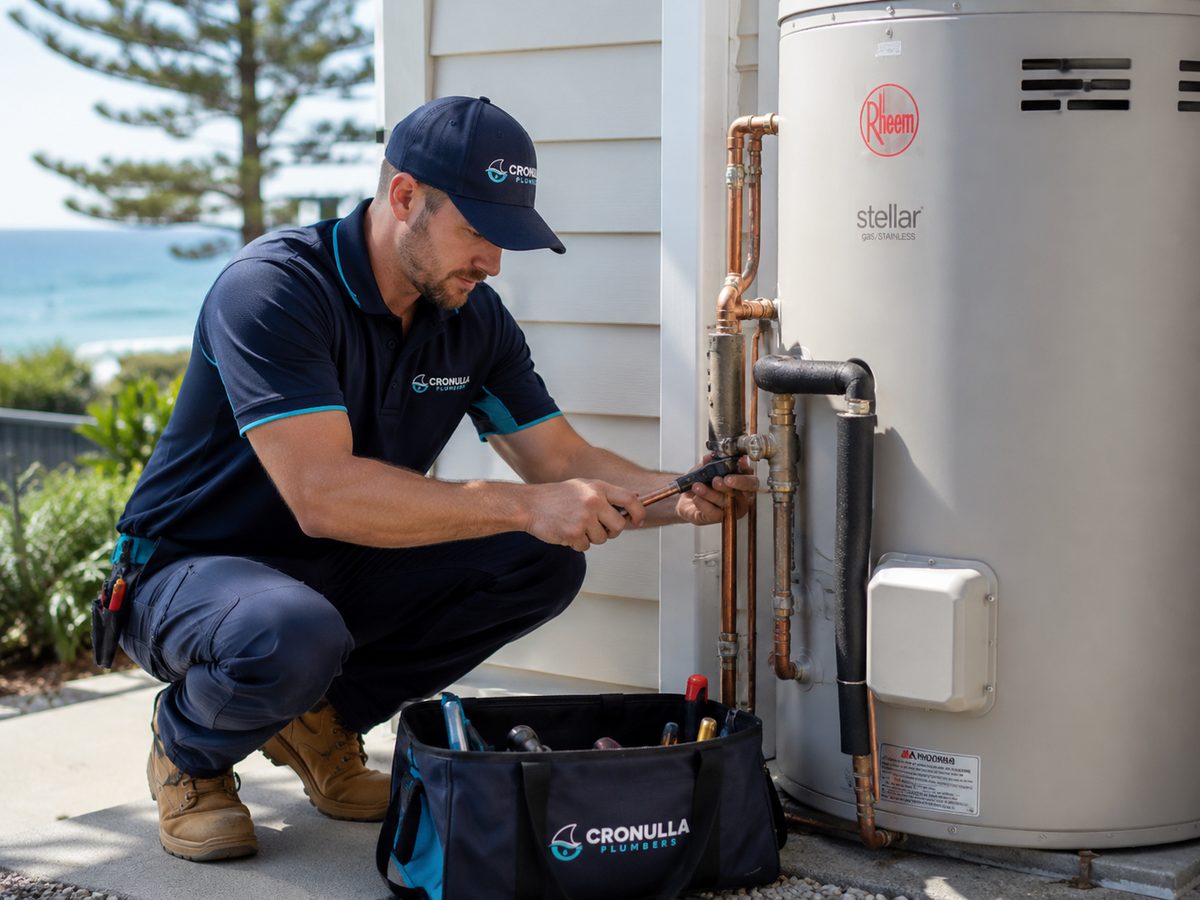
On the coast, where the unit lives matters as much as the type
Choosing a hot water system usually gets framed as gas versus electric versus heat pump, and that choice does matter. But near the beach and the bay there is a second question that inland buyers never have to ask: will the unit survive where it has to go? Salt-laden air and sea spray are hard on anything mounted outside, and around Cronulla and the Sutherland Shire that reality shapes the decision as much as running costs do.
The short version is that the best system for a coastal home is the one that fits your household and can be sited out of the worst of the salt. Get both right and the unit lasts. Get the technology right but bolt it to the weather side facing the sea, and you have bought yourself an early replacement.
Gas, electric or heat pump, in brief
Each of the three families behaves differently on the coast, and their exposed parts differ too. We go deeper on running costs and suitability in our separate guide to gas, electric and heat pump hot water; here is how they weather the salt.
- Electric storage: an insulated tank with heating elements, cheap to buy and easy to install almost anywhere, including a garage or internal cupboard. That indoor option is a real advantage on the coast, because it can escape the salt air entirely. Running cost is its weak point unless it is on off-peak power or solar.
- Continuous-flow gas: a compact unit mounted on an external wall that heats water on demand and never runs out. It needs a gas connection and a flue, and because it lives outside, its casing, burner and heat exchanger cop the salt directly, so siting and materials matter.
- Heat pump: the most efficient of the three by a wide margin, but it works by drawing heat from the outside air, so it has an outdoor compressor, fan and evaporator coil. Those fins and coils are exactly what salt air attacks first, which makes sheltered siting and coastal-grade construction more important for a heat pump than for anything else.
How salt air shortens an outdoor unit
Salt is corrosive, and near the coast it is carried on the wind as a fine spray that settles on everything and holds moisture against the metal. On a hot water unit it attacks the case seams, the fittings, the relief valve, the electrical connections and, on a heat pump, the aluminium fins and the fan. The closer you are to the water, the heavier the load: homes within a few streets of the beach or a bay in Cronulla, Burraneer, Caringbah South and Sylvania Waters see it worst, and a waterfront position with constant spray is the harshest of all.
Sun, storms and the ordinary temperature swings add to it, so an outdoor coastal unit simply ages faster than the same model would inland or in a garage. This is not a reason to avoid a good system, it is a reason to plan for the environment. The units that reach a healthy old age around here are the ones that were sited and specified with the salt in mind from day one.
Siting and materials for a coastal home
You cannot move the sea, but you can take most of its bite out of the installation. A few choices make the difference between a unit that lasts and one that rusts.
- Put it on the sheltered side. A leeward wall, a side passage, under eaves or behind a fence, out of the direct spray and prevailing salty wind, is worth years of extra life over the exposed weather side.
- Consider indoors or the garage. For electric storage in particular, an internal position escapes the salt almost completely.
- Specify for the coast. Where a maker offers a coastal or marine-grade casing, coated fins or stainless fittings, they earn their keep near the water. A stainless tank resists internal corrosion by its material, though its external parts still need the same sheltered siting.
- Give a heat pump clean, sheltered airflow, and rinse the coil with fresh water occasionally to wash the salt off. Mind the noise too, since a compressor near a neighbour's window is its own problem.
- Keep the pipe run to the kitchen and main bathroom short, so a sheltered spot does not come at the cost of slow hot water and wasted heat.
Matching the system to the home
The house narrows the field before preferences do. A big waterfront block in Burraneer or Sylvania Waters usually has room to site any of the three well away from the spray, so the choice comes down to running cost and household size. A compact Cronulla cottage or a unit may have only one clear external wall, which can favour a slim continuous-flow unit or an indoor electric tank. No gas connection, or a plan to drop it, rules gas out.
Holiday lets and rentals deserve a mention of their own. A property that sits empty for stretches and then runs hard over summer rewards simple, robust equipment and a sheltered position, because the owner is not there to catch the first signs of corrosion. Whatever the property, sizing it to the real peak demand rather than a rule of thumb keeps you off both cold showers and wasted standing heat.
Getting it replaced the right way
Hot water and gas work is licensed in NSW, so the installation should be done by a licensed plumber and come with a Certificate of Compliance, and the connection has to meet Sydney Water's requirements. That is worth insisting on for the paperwork alone when you sell.
The best time to choose is before the old unit fails, not on the cold morning it does. Planning ahead lets you weigh gas, electric and heat pump properly, check any federal or NSW incentives current at the time, and site the new unit where the salt cannot reach it. We are happy to look at your setup and give a fixed quote up front for any home in Cronulla, Woolooware, Burraneer, Caringbah, Miranda or Sylvania.
Common questions
Do outdoor hot water units really fail faster near the beach?
Yes. Salt-laden air and spray corrode casings, fittings, valves, electrical connections and heat pump coils faster than sun and rain alone, so a unit within a few streets of the water tends to age noticeably quicker than the same model inland or in a garage. Sheltered siting and coastal-grade materials are the main defences.
Is a heat pump a good idea on a beachfront block?
It can be, because a heat pump is by far the most efficient option, but it has the most exposed parts: an outdoor compressor, fan and evaporator coil that salt attacks first. On a beachfront block it needs a genuinely sheltered position with clean airflow, ideally a coastal-grade unit, and an occasional fresh-water rinse of the coil. Sited badly, it will not reach its expected life.
Should I choose a stainless steel tank near the sea?
A stainless tank resists internal corrosion by its material rather than a sacrificial anode, which some owners like. It is not immune to the coast, though, because its external casing, valves and fittings still face the salt air, so you still want it sited out of the direct spray. It is one good option among several, not a way to ignore siting.
Gas or electric for a coastal home?
It depends on the house and the household more than the coast. Electric storage can go in a garage and escape the salt, which suits it here, but costs more to run on a flat tariff. Continuous-flow gas never runs out and suits a big household, but lives outside and needs a gas connection. If you plan to stay and can site it sheltered, a heat pump usually wins on running cost. We size and recommend from your actual usage.