
Why the Same Drain Keeps Blocking in Cronulla
The same drain keeps blocking in Cronulla for a reason: roots at old earthenware joints or sand near the coast. Why a camera finds the real cause.
By the Cronulla Plumbers teamPublished 19 May 2026
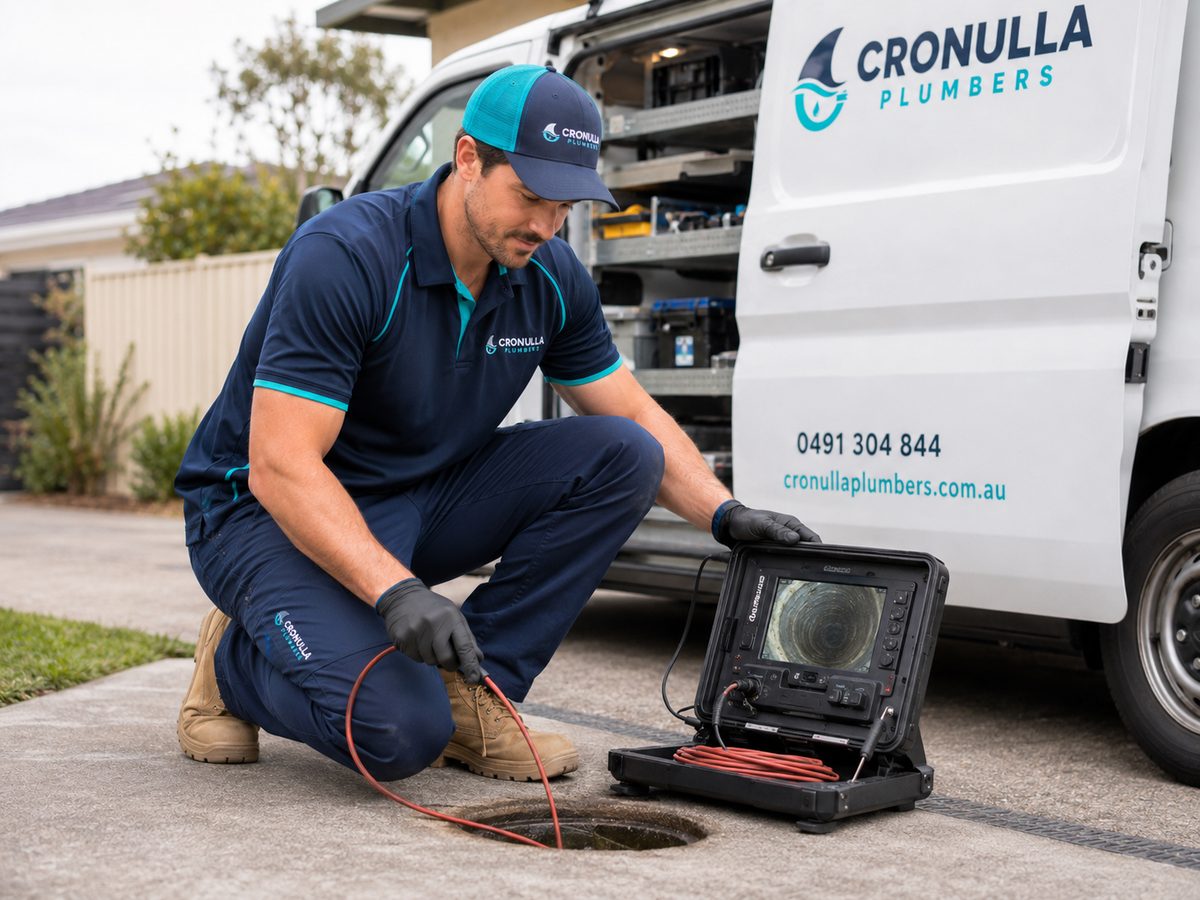
A drain that keeps blocking is telling you something
A one-off blocked drain is often just bad luck: too much down the sink one night, a stray toy, a bad week. A drain that blocks again a few months later is different. It is telling you that something in the line itself is wrong, and that clearing it only ever bought you time. Around Cronulla the same two causes come up again and again, and neither of them is fixed by another plunge or another bottle of drain cleaner.
The first is tree roots working their way into old earthenware joints. The second is sand and grit washing into the line near the coast. Both narrow the pipe quietly for months, then combine with the usual grease and debris to close it off completely. Understanding which one you have is the whole game, because they need different answers.
Roots at the earthenware joints
Much of the older housing in Cronulla and neighbouring Caringbah and Woolooware is still drained by earthenware sewers: glazed clay pipe laid in short sections with mortared joints. Those joints are the weak point. As sandy ground settles and shifts, a joint opens a fraction and a thread of moisture escapes into the soil. A nearby fig, paperbark, banksia or palm senses it and sends fine roots straight to the gap, then thickens season after season until the pipe is choked.
This is why a root-affected drain blocks on a rough schedule rather than at random. Clearing cuts the roots out and flow returns, but the joint they entered through is still open, so the roots grow back. If your drain blocks around the same time each year, especially after rain when the roots are most active, roots at the joints are the prime suspect. The honest fix is to find every affected joint with a camera, then decide between managed clearing and relining the run so there are no joints left for roots to find.
Sand and grit near the coast
Close to the beach and the dunes, there is a second local culprit that inland plumbers rarely deal with: sand. Fine sand and grit wash into gully traps, stormwater pits and drainage lines and settle in the low spots and any slight belly in the pipe. On its own a thin layer does little, but it steadily narrows the bore, and once grease or debris starts catching on it the line blocks far sooner than it should.
Sandy soil drains beautifully, which is one of the good things about living here, but the same sand that makes the garden easy to dig ends up in the drainage over the years. A drain that blocks repeatedly with a gritty, sludgy mix rather than roots, particularly a stormwater or yard drain near the beach, is usually carrying more sand than it can move. High-pressure jetting scours it out of the bellies properly where an eel just bores a hole through it.
Grease, wipes and the summer holiday spike
Two more things turn a marginal drain into a repeat offender. Kitchen grease cools and hardens on the pipe wall, and so-called flushable wipes do not break down the way toilet paper does, snagging on any root or rough joint already in the line. Neither causes a recurring blockage on its own in a healthy pipe, but on a line already narrowed by roots or sand they are the last straw.
The beach-town summer matters too. Holiday lets and strata blocks near the water fill up over the summer break, and a drain that coped with two people all winter suddenly serves a full house. If your recurring blockages cluster around the busy season, the line was probably always marginal, and the extra load is simply exposing it.
Why a camera is the only honest answer
Every one of these causes looks identical from the floor: a slow drain, a gurgle, a backup. You cannot tell roots from sand from a collapsed section by watching the water, and they need completely different fixes. That is why clearing a recurring drain without looking inside it just books the next blockage.
Our sequence is fixed. We clear the line so the camera can see, then run a CCTV inspection along the whole run, noting the distance of every fault and locating the significant ones on the surface with a sonde. You watch the footage or we send you the recording, and only then do we talk about options: managed clearing on a schedule, a patch at an isolated joint, or a reline for a run full of them. You see the cause before anything is quoted, so the decision is yours and it is based on evidence rather than a guess.
What to do if your drain keeps blocking
A short checklist before you call, and one firm rule.
- Note the pattern: how often it blocks, what time of year, and whether it follows heavy rain.
- Note what comes up: fine gritty sludge points at sand, a fibrous or woody mass points at roots.
- Check whether more than one fixture is slow at once, which points at the main line rather than one trap.
- Stop reaching for chemical drain cleaner. It will not touch roots or shift settled sand, and it makes the drain more dangerous for whoever clears it next.
- If it has blocked more than about once a year, book a clear and camera rather than another clear on its own.
Common questions
How often is too often for a drain to block?
As a rough guide, more than once a year on the same drain means the line has a cause worth finding rather than a run of bad luck. At that point a camera inspection pays for itself, because it tells you whether you are dealing with roots, settled sand, grease or a structural fault, and each of those has a different fix.
Will a chemical drain cleaner stop it coming back?
No. Caustic cleaners barely affect live tree roots and do nothing about sand settled in a belly, so they only ever burn a temporary channel through the soft part of a blockage. Worse, a drain full of caustic is hazardous for the plumber who then has to clear it properly. For a recurring blockage the answer is finding the cause, not treating the symptom.
Is the blocked drain my responsibility or Sydney Water's?
Generally the drainage on your property is yours to maintain, while the sewer main and the network beyond your connection are Sydney Water's. The line can cross that boundary, and shared drains behind older units add another party. We identify where responsibility changes during the camera inspection, so nobody pays to fix a pipe that is not theirs.