
Fixing Leaking Taps in Older Homes
Older Shire tapware wears out in salt air. Why taps in fibro cottages and brick-veneer homes leak, ceramic disc versus washer, and reseat versus replace.
By the Cronulla Plumbers teamPublished 18 June 2026
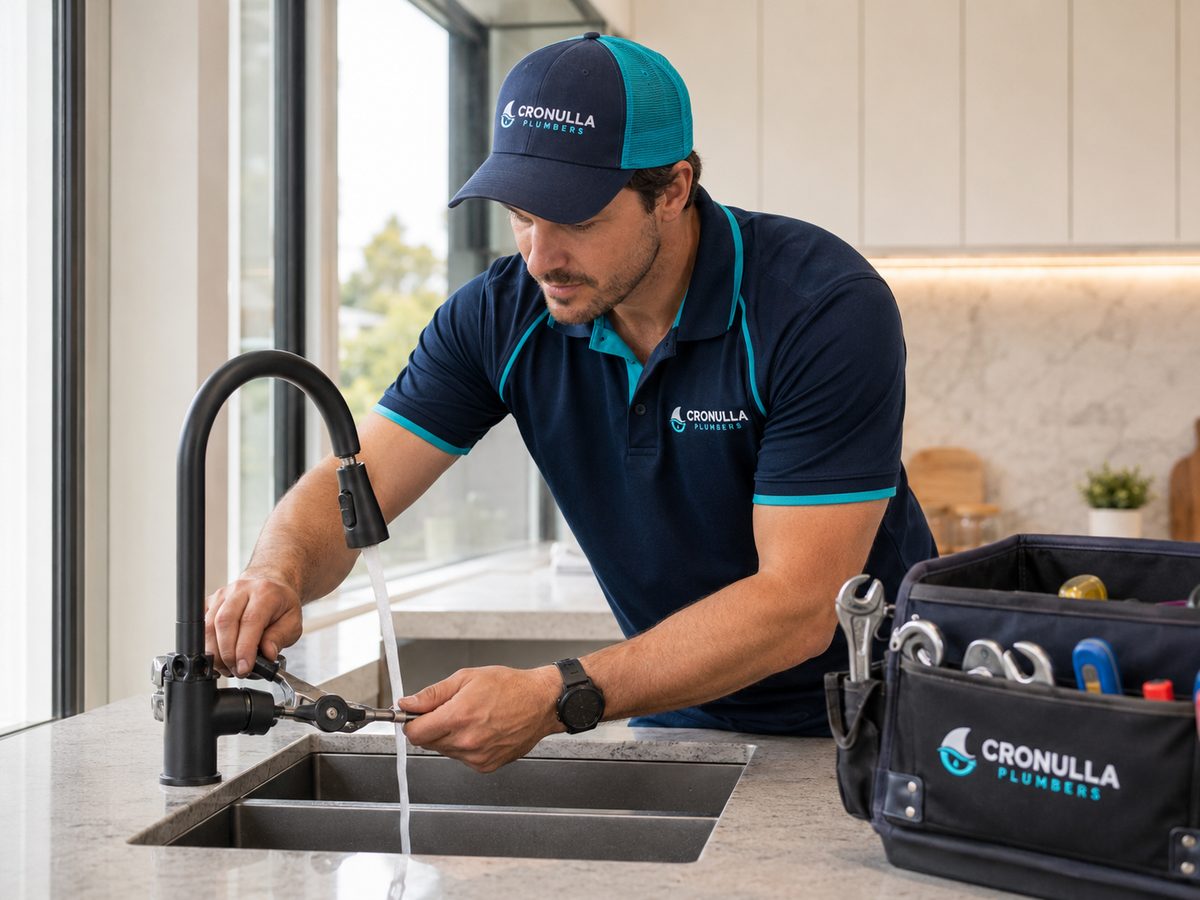
Why old taps start to leak
A traditional tap does its whole job with three small parts. A rubber washer sits in a brass fitting called a jumper valve, and when you turn the tap off, the washer presses down onto a machined brass seat inside the tap body to stop the flow. Every open and close compresses that washer against the seat. Over the years the rubber hardens, cracks and wears a groove, the seal stops being watertight, and the tap begins to drip. On a tap that has run for decades, that is simple wear, and a matched new washer usually settles it.
The mistake people make is winding a leaking tap harder and harder to stop the drip. That does not fix the seal. It crushes a tired washer into a worn seat and grinds both, so the tap gets stiffer and the drip comes back faster. If a tap needs real force to shut off, the parts inside are telling you they are due for service, not that you need a stronger wrist.
The part people forget: the seat
The washer is only half the seal. The brass seat it lands on wears too, especially once a hardened washer has been grinding against it. A pitted or grooved seat will chew through a brand-new washer in weeks, which is why a tap sometimes drips again a fortnight after it was supposedly fixed. The washer was never the whole problem.
The proper repair is to re-cut the seat with a reseating tool so the new washer meets a smooth, flat surface. On a tap with plenty of brass left in the body, reseating and a fresh washer gives a clean, lasting result. On tapware that is badly worn or corroded, there is not enough sound metal to cut back to, and reseating only buys a little time. Knowing which situation you are in is most of the job, and it is the part a quick hardware-store washer swap skips.
Washer taps versus ceramic-disc mixers
Older homes across the Shire tend to have separate hot and cold washer taps, the kind you wind several turns to open. These are the taps a washer and a reseat will usually fix, provided the body is sound. They are also the ones most likely to use imperial-sized spindles and seats in a house built before metric fittings became standard, which we cover below.
Renovated bathrooms and kitchens more often have a single mixer with a ceramic disc cartridge instead of a washer. A mixer does not have a washer to replace. When it drips or gets notchy to turn, the cartridge itself has worn or a piece of grit has scored the discs, and the fix is a new cartridge matched to that brand and model. There are a lot of cartridge patterns out there, so getting the exact match matters, and it is one reason we carry the common ones on the van rather than making a second trip.
Salt air and the outdoor taps
Near the beach and the bay, the outdoor taps live the hardest life of any tapware on the property. Sea air corrodes the chrome and eats into the brass underneath, so a garden tap or a hose bib a few streets from the water tends to seize, drip or weep at the spindle years before the same tap would inland. The salt gets into the moving parts as well as the seat, which is why a new washer on a badly corroded outside tap so often fails to hold.
When we look at a corroded outdoor tap, the honest question is whether there is enough sound brass to reseat and re-washer, or whether the body itself is past it. On a tap that seizes solid or weeps around the spindle no matter what goes in, replacing the tap is the repair that actually lasts, rather than a washer that leaks again by the next season. Forcing a salt-seized spindle is also how a five-minute job becomes a bigger one, because old brass can shear off in the body.
Older Shire tapware: imperial fittings and brittle brass
Plenty of the fibro and weatherboard beach cottages and war-service brick homes we work on in Cronulla, Caringbah and Woolooware still have their original tapware. That brings two quirks worth knowing about. First, older taps often use imperial-sized spindles, washers and seats that do not match the metric parts a hardware store hands you by default. The right parts exist, but forcing a near-enough metric fitting into an imperial body is a common reason a repair fails soon after.
Second, brass that has been in the wall for decades becomes brittle, and salt exposure hurries that along. A spindle that has seized with age can shear if it is wound too hard, turning a washer change into a tap replacement. If your taps are old, stiff, or the drip has already come back after a new washer, mention it when you book so we arrive with the right spindles, seats and reseating gear rather than discovering the problem on the day.
Reseat, rewasher, or replace: how we decide
Our first preference is always the honest repair. If the tap body has good brass left, a reseat and a matched washer, or the correct cartridge on a mixer, restores it properly and we will do exactly that. Replacement is the right call only when the body is corroded or worn past saving, when the parts no longer exist, or when you have already paid for the same washer twice.
A note on doing it yourself: in New South Wales, changing a tap washer on your own tap is one of the few plumbing tasks a householder may legally do. Almost everything past that, including reseating under pressure, changing a cartridge, replacing a tap body or any pipework, is licensed plumbing work. If you enjoy the small stuff, do the washer on a modern tap with easy access. For old, imperial or salt-seized tapware, or a drip that keeps coming back, it is worth having us match the parts and quote the fix before any work starts.
Common questions
Why does my tap drip again a few weeks after a new washer?
Almost always the brass seat under the washer is worn or pitted, so a fresh washer cannot make a lasting seal. Near the coast, salt corrosion makes this worse. The fix is to re-cut the seat with a reseating tool, or on a badly worn or corroded tap, to replace the spindle or the tap body.
Can old imperial taps still be repaired?
Usually yes, as long as the brass body is sound. Imperial-sized washers, jumper valves and seats are still available, they are just not the default parts on a hardware shelf. The trick is matching the right size and reseating properly rather than forcing a metric part into an imperial body, which is what makes a repair fail quickly.
My outdoor tap is seized and weeping. Repair or replace?
If salt has corroded the body and the spindle is seized, replacing the tap is usually the honest, longer-lasting answer. Reseating and a new washer can buy time on a tap with sound brass left, but on badly corroded coastal tapware a fresh washer rarely holds, and forcing a seized spindle can shear it in the body.