
Where to Put a Hot Water Unit on a Coastal Block
Where to put a new hot water unit on a Sutherland Shire block: clearances, short pipe runs, keeping it off the sea-spray side, and easy service access.
By the Cronulla Plumbers teamPublished 12 July 2026
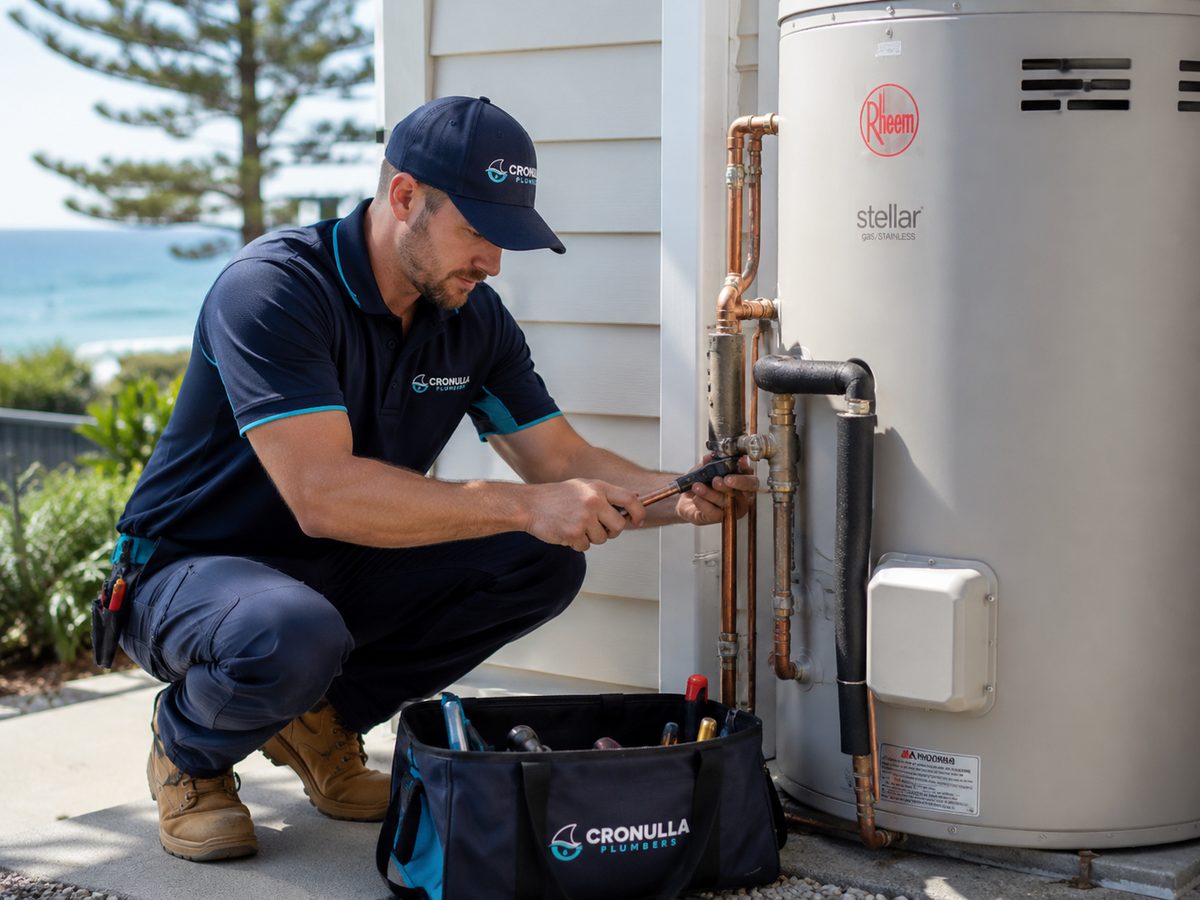
Where the unit goes is a design decision
On a Shire block the spot a hot water unit lives in is not an afterthought. The right position gives you faster hot water, an easier service job every few years, and a unit that lasts because it is out of the worst of the weather. The wrong one, usually chosen in a hurry on the day the old unit failed, leaves you with a slow tap at the far end of the house, an awkward repair when the time comes, or a tank bolted to the weather side where salt spray eats it years early.
We plumb across Cronulla, Woolooware, Burraneer, Caringbah, Miranda and Sylvania, and the housing is anything but uniform. Narrow beach-cottage blocks and unit courtyards near the beach sit a few streets from big waterfront blocks on Gunnamatta Bay and the Sylvania Waters canals. That mix means there is rarely a single right answer, so we walk the property first, weigh the options, and give a fixed quote before any work starts. Planning the position ahead of a failure almost always beats deciding under pressure with no hot water in the house.
Clearance and compliance come first
Placement is not a free choice, which is why this is a design conversation rather than a like-for-like swap. Gas units need flue and clearance distances from windows, doors, combustible surfaces and boundaries. Every unit's temperature and pressure relief valve needs a safe drain point, and tray-mounted or internal installations need a safe tray plumbed to drain. Heat pumps need clear airflow around the evaporator and a thought for noise, because a unit running overnight close to a neighbour's bedroom window is a complaint waiting to happen.
These requirements come from the plumbing standards, the manufacturer's instructions and Sydney Water's rules for the connection, and a licensed plumber has to satisfy all of them. So the tidy spot you had in mind may need pipework or drainage changes to make it compliant, and occasionally it rules a position out altogether. Hot water and gas work is licensed in NSW, so whoever does yours should hold a NSW plumbing licence and hand over the Certificate of Compliance for the job.
Keep the pipe run short
The distance between the unit and the taps you use most matters more than people expect. A long run means a longer wait for hot water at the tap, more water down the drain while you wait, and more heat lost through the pipe wall on every draw. Bringing the unit closer to the kitchen and main bathroom, or at least shortening the run to them, is one of the simplest ways to improve day-to-day performance.
On a big waterfront block in Burraneer or Sylvania Waters there can be a temptation to tuck the unit well away from the house where it is out of the way. That can suit the look of the place, but it lengthens the pipe run, so we weigh the visual gain against slower hot water and higher standing heat loss. On a compact beach cottage or a unit the opposite problem appears: the only clear wall may sit a long way from the bathroom, and a slimmer or continuous-flow unit placed closer can solve it.
Keep it off the sea-spray side
Near the beach and bay, the single biggest siting decision is which wall. The weather side facing the sea copes with salt-laden air and spray that corrode casings, fittings, relief valves and heat pump coils years faster than a sheltered wall ever would. A tank or heat pump on the exposed side of a Cronulla or Burraneer home can look tired while the same unit on the leeward side is still going strong.
The practical answer is to keep the unit to a sheltered side or rear wall, behind a fence line, in a side passage or under eaves, out of the direct spray and prevailing salty wind while still meeting its clearances. A garage or internal position escapes the salt almost entirely and is worth considering for electric storage. A slimmer tank or a wall-mounted continuous-flow unit is often easier to tuck into a protected spot than a wide storage tank, which is one more reason the choice of system and the choice of position are best made together.
Cottages, units and waterfront blocks
The block itself usually points to the answer, so when we plan a placement we start with what you actually have to work with.
- Tight beach cottages and units: narrow side passages, small courtyards and shared plant areas can rule out a like-for-like storage tank, so a slimmer tank or a wall-mounted continuous-flow unit often fits the space, and the clearances, more easily
- Waterfront blocks in Burraneer or Sylvania Waters: there is room to choose, so we balance a sheltered position off the sea-spray side against keeping the pipe run to the main taps sensible
- Service access: wherever the unit lands, leave room to work, because a unit boxed in behind a shed, a pool pump or a new deck turns a routine anode check or valve replacement into a slow, awkward job
- Future changes: if you might move to a heat pump or switch fuel later, a position with power, airflow and drainage nearby saves a bigger rework down the track
Common questions
Can my new unit go in a different spot than the old one?
Usually, yes. Relocating a unit adds some pipework, and the new position still has to meet the clearance, flue and drainage requirements, which we confirm on site. At changeover the extra cost is modest next to years of easier access and, often, faster hot water and longer life out of the salt spray.
Which side of the house should an outdoor unit go on near the beach?
The sheltered side, away from the direct sea spray and the prevailing salty wind. Salt-laden air corrodes casings, fittings, valves and heat pump coils much faster on the exposed weather side, so a leeward wall, a side passage or a garage will get you noticeably more years out of the unit.
My courtyard is tiny. What are my options?
Small courtyards, unit plant areas and narrow side passages often cannot take a like-for-like storage tank. A slimmer tank or a wall-mounted continuous-flow unit takes up less room and is easier to fit within the required clearances, which is why we look at the system and the position together.