
Protecting Outdoor Plumbing from Salt Air and Storms
Salt air and sea spray are hard on outdoor taps, valves, hoses and hot water units across the Shire. Why coastal plumbing ages fast and how to slow it.
By the Cronulla Plumbers teamPublished 12 July 2026
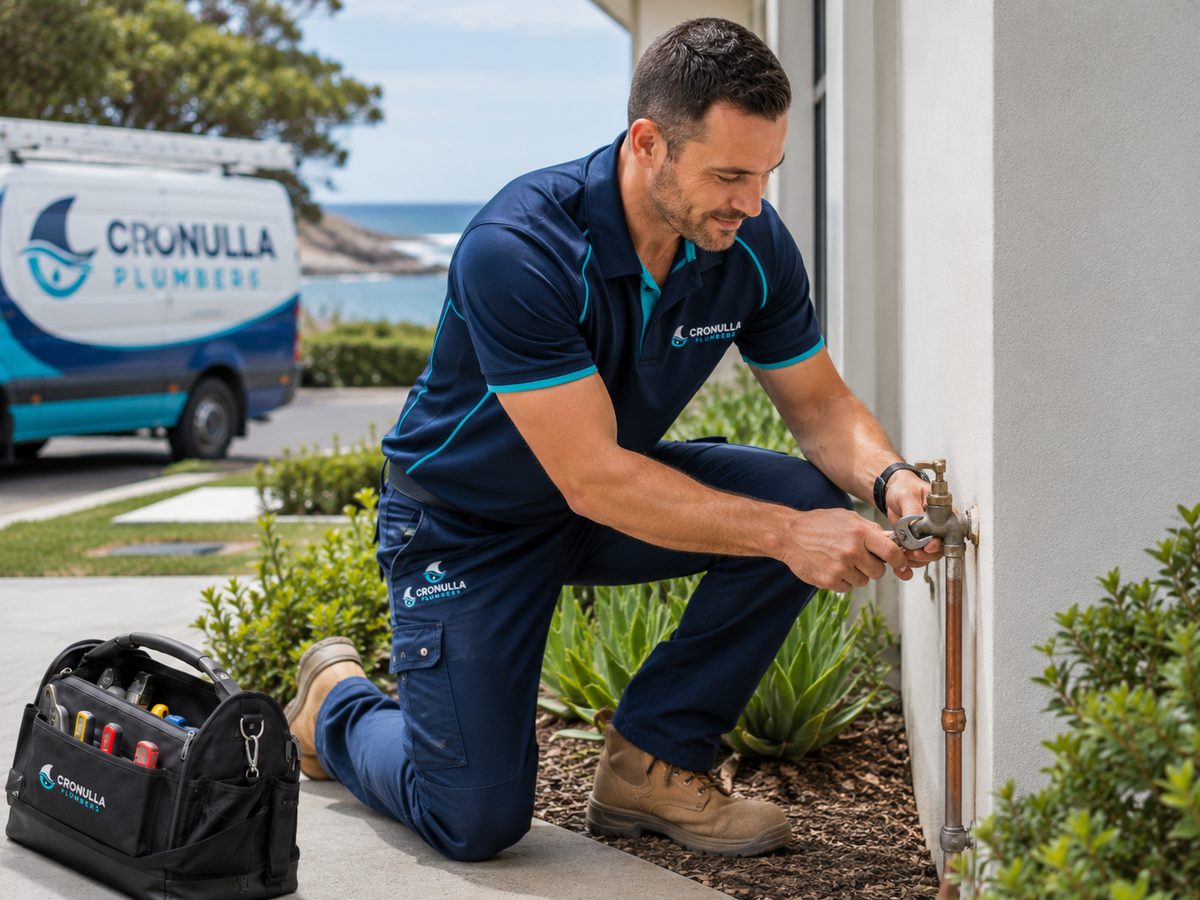
The hardware that lives outside
Homes across Cronulla, Woolooware, Burraneer, Caringbah, Miranda and Sylvania carry a good deal of plumbing on the outside of the house: garden and pool taps, external hot water units, irrigation lines, exposed valves, and the flexible hoses tucked behind cabinets and cisterns. None of it is glamorous, and most of it gets no attention until the day it fails. That is a shame, because on the coast the failures are usually predictable and largely preventable.
What makes the Shire different from an inland suburb is the air. Salt-laden sea spray drifts in off the beach at Cronulla and off the bays at Gunnamatta, Woolooware and Port Hacking, settles on everything facing the weather, and quietly attacks metal fittings for years before anything visibly fails. The closer you are to the water, the faster it happens. This article covers where that wear shows up first and the small habits that genuinely slow it down.
Why salt air is harder on exposed fittings
Salt does two things that ordinary weather does not. It holds moisture against a surface long after rain or spray has passed, and it speeds up the electro-chemical reaction that corrodes metal. So a brass tap body, a chrome-plated spindle, a copper pipe or a galvanised bracket on the weather side of a coastal home ages faster than the same part a few kilometres inland. You will often see it as a white or green bloom around fittings, then pitting, then a part that seizes or weeps.
The non-metal parts age too, just differently. Ultraviolet light and repeated heating and cooling break down the rubber, plastic and synthetic materials in flexible hoses, tap washers, plastic fittings and seals. A washer that was soft when it went in becomes hard and brittle, a hose that was flexible starts to perish, and a plastic fitting grows fragile. The change is slow and invisible until something weeps, sticks or splits, which is exactly why it tends to arrive as a surprise.
Flexible braided hoses: the quiet flooding risk
The flexible braided hoses under sinks and vanities, behind toilets and on tap connectors deserve special attention, because they are a leading cause of sudden indoor flooding. These hoses have a real service life. The braided sleeve can fray and the inner tube can perish with age, and when one lets go it does not weep politely: it releases mains-pressure water continuously until someone finds the stop tap. A hose failing while a beach house sits empty between stays is how a kitchen or bathroom ends up flooded for a day.
The good news is that this is one of the easiest risks to manage. Braided hoses are inexpensive, and checking them is quick: look for rust spots or fraying on the braid, bulging, kinks or any dampness at the connectors. We suggest treating them as consumables and replacing them on a schedule rather than waiting for a burst. Knowing where your main shut-off is, and turning it off when you go away for any length of time, is a sensible backstop, and it matters more here where a lot of homes are holiday lets or second homes left empty for weeks.
Outdoor hot water units and relief valves
The most expensive piece of plumbing that usually lives outdoors is the hot water unit, and near the coast it is the single component salt air punishes hardest. Storage tanks and heat pumps mounted on the weather side of the house collect spray on the casing, and the seams, the base where moisture sits, and the valves, unions and fittings around the unit all corrode faster than the maker allowed for. We often find outdoor coastal units looking tired years before an equivalent inland unit would.
Inside a storage tank, a sacrificial anode protects the steel shell by corroding in its place. It is a rod of magnesium or aluminium that is deliberately more reactive than the tank, so it is consumed first. Once the anode is spent, the tank itself starts to corrode, and a rusted-through tank cannot be repaired. In a salty coastal position the water chemistry and the harder external environment can shorten that clock, so having the anode checked around the five-year mark is one of the cheapest ways to extend a tank’s life, and it is a step most owners never take.
The temperature and pressure relief valve is the other one to watch. It is a safety device that must be able to open, and an aged or salt-crusted valve can seize. Easing the test lever gently a couple of times a year keeps it free. A valve that constantly dribbles, or that never releases at all after easing, is telling you it needs replacing.
Garden taps, pool lines and buried lines
On the larger blocks and waterfront properties around Burraneer, Sylvania Waters and Caringbah South, there is often a lot of outdoor plumbing: garden taps, irrigation, pool top-up and backwash lines, and buried garden lines that can be decades old. Old galvanised pipe corrodes from the inside until flow drops away or the line seizes solid, and buried fittings can weep unseen for a long time before a soft or oddly green patch of lawn gives them away. Add salt spray and pool splash-out and the exposed brass and chrome above ground ages faster again.
The valve that matters most is the one you rarely touch. Garden isolation valves, pool isolators and outside stop taps exist for the day you need to shut water off quickly, and a valve that has quietly corroded solid turns a simple job into a scramble. Our advice is simple: turn every external valve you own through its full travel once or twice a year. A valve that gets exercised stays free, while one left untouched for a decade often will not budge when you finally need it.
Slowing it down, and when replacement is the honest call
You cannot stop salt air, but a few small habits make a real difference to how long outdoor and hidden plumbing lasts on the coast:
- Rinse salt spray off exposed tapware, valves and the hot water unit casing with fresh water now and then, especially on the weather side of the house
- Check flexible braided hoses under sinks, behind toilets and on tap connectors, and replace them on a schedule rather than waiting for a burst
- Know where your main shut-off is, and turn it off when the house is empty for more than a day or two, which is common with beach houses and holiday lets
- Have the sacrificial anode on a storage hot water unit checked around year five, sooner if the unit sits in full sea spray
- Ease the relief valve lever gently a couple of times a year and watch that it reseals
- Turn every external, garden and pool valve through its full travel once or twice a year so spindles stay free
- Treat a badly corroded outside tap as a replacement rather than a repeat repair, since a fresh washer will not seal on a pitted, salt-worn seat
Common questions
Does living near the beach really wear plumbing out faster?
Yes, noticeably. Salt-laden air holds moisture against metal and speeds up corrosion, so exposed tapware, valves, copper and outdoor hot water units age faster within a few streets of the beach or the bays than they would inland. It is the main reason coastal homes need outdoor fittings looked at more often.
How often should braided flexible hoses be replaced?
There is no single rule, because it depends on the quality of the hose and its conditions, but treating them as consumables rather than permanent fittings is the safe approach. Check them a couple of times a year for fraying, rust, bulging or dampness at the connectors, and replace any that show wear. Because a burst hose can flood a room while nobody is home, replacing older ones on a schedule is cheap insurance.
My outside tap drips even after a new washer. Why?
A new washer only seals well against a sound seat. On older or salt-worn coastal tapware, the brass seat itself is pitted or corroded, so a fresh washer cannot make a lasting seal and the drip soon returns. Reseating can sometimes buy time, but on badly corroded taps it rarely holds for long. In those cases replacing the tap is the honest, longer-lasting fix.