
How Salt Air Corrodes Coastal Plumbing (and What to Do)
What salt spray does to copper, tapware, mixers, valves and outdoor hot water units on the Cronulla peninsula, the warning signs, and how to slow it down.
By the Cronulla Plumbers teamPublished 24 June 2026
Why the coast is the defining plumbing issue here
If there is one thing that sets plumbing in Cronulla and the Sutherland Shire apart from an inland suburb, it is salt. Sea spray off the beach at Cronulla, and off the open water at Gunnamatta Bay, Port Hacking, Woolooware Bay and the Georges River, carries fine salt particles inland on the wind. They settle on tapware, on copper pipe, on the casing of the hot water unit, and on every metal bracket and valve facing the weather. Then they sit there, holding moisture and slowly eating the metal, long before anything visibly goes wrong.
Homes within a few streets of the water cop the most of it, but the whole peninsula is affected to some degree. This is not a minor cosmetic issue. Over years it decides how long your tapware, mixers, valves and outdoor hot water unit actually last, and it explains why fittings that would give decades of service inland need attention sooner here. Understanding what salt does, and where it strikes first, is the key to staying ahead of it.
What salt actually does to metal
Corrosion is an electro-chemical reaction, and salt accelerates it in two ways. First, salt is hygroscopic, meaning it draws and holds moisture from the air, so a salted surface stays damp far longer than a clean one, even on a dry day. Second, the salt in that film of moisture makes it a far better conductor, which speeds up the reaction that pulls metal apart. The result is that the same brass, copper, chrome or steel part corrodes several times faster in a sea-spray environment than it would a short drive inland.
You see it as a white, chalky or green bloom around fittings first, then as pitting where the surface starts to break down, and finally as a part that weeps, seizes or fails. Dissimilar metals in contact make it worse: where a brass fitting meets a steel bracket, or a copper pipe touches a galvanised clip, salt moisture between them sets up galvanic corrosion that chews through the more reactive metal at the join. A lot of coastal failures we attend start at exactly these points.
Where it strikes first: tapware, mixers and cartridges
Chrome-plated tapware is usually the first thing homeowners notice. The chrome layer is thin, and once salt works through a tiny flaw the brass underneath corrodes and lifts the plating, so taps go from mirror-bright to blotchy and pitted, often on the outdoor and weather-facing fittings first. That is cosmetic at the start, but the same process attacks the working parts.
Inside a modern mixer tap, the ceramic-disc cartridge is the part that controls flow and temperature. The ceramic discs themselves are tough, but the metal body, springs and seals around them are not immune, and salty, mineral-laden conditions shorten their life. A mixer that has become stiff to turn, that drips no matter how firmly you close it, or that has lost the clean feel it had when new, is often telling you the cartridge is on the way out. Outdoor mixers and pool-area tapware, sitting in constant spray, are the ones we replace most.
Isolation valves, tempering valves and the small stop taps under basins and behind toilets are the quiet casualties. They spend years untouched, and salt-laden air can corrode a spindle solid so that the one valve you need in an emergency will not turn. Exercising them occasionally is the cheapest insurance there is.
Copper pipe, fixings and the outdoor hot water unit
Copper is the workhorse of household plumbing and it holds up well overall, but exposed external copper on the weather side of a coastal home does pit and corrode over time, especially where it is clipped to steel or runs close to a salty surface. Soldered joints and fittings are the usual weak points. The steel fixings, brackets and clips that hold pipework and units in place often go before the pipe does, rusting through and letting a run sag or a unit work loose.
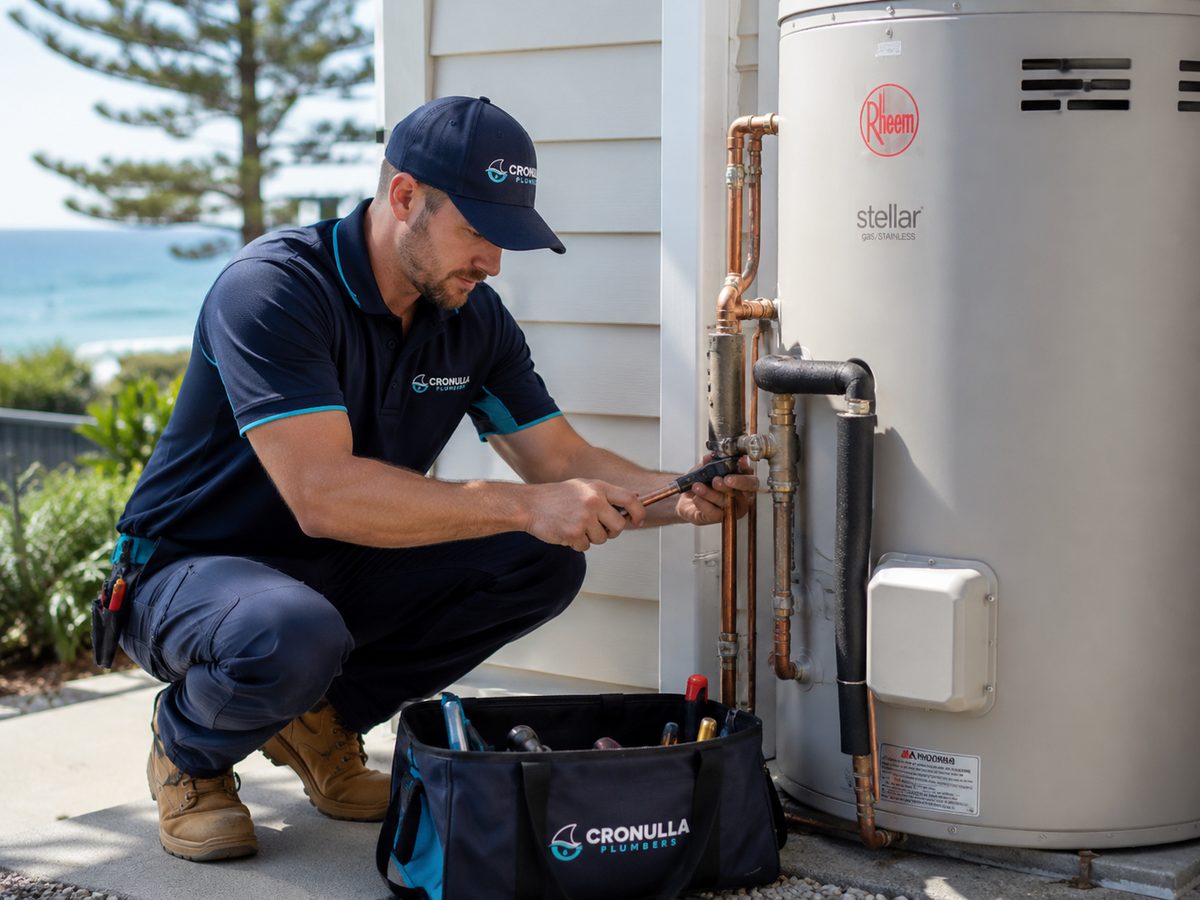
The outdoor hot water unit is where salt air does its most expensive damage. Storage tanks and heat pumps mounted on an exposed external wall collect spray on the casing and around the base where moisture pools, and the seams, fittings, valves and unions all corrode faster than the manufacturer allowed for. Inside a storage tank, the sacrificial anode is consumed protecting the steel shell, and once it is spent the tank rusts from the inside out and cannot be repaired. In a full sea-spray position that whole timeline runs faster, which is why a coastal unit often needs replacing years before an equivalent inland one. Heat pumps add another concern: their finned coil and fan sit out in the salt air and lose efficiency as the fins corrode.
The warning signs worth acting on
Salt-air corrosion gives you plenty of notice if you know what to look for. None of these means panic, but each is a prompt to have the fitting looked at before it fails.
- A white, chalky or green powder building up around taps, valves, unions or the base of the hot water unit
- Chrome tapware going blotchy, pitted or bubbling, particularly on outdoor and weather-facing taps
- A mixer that has become stiff, notchy, or that drips no matter how firmly you close it
- Rust streaks running from brackets, clips or screws, or a pipe run or unit that has worked slightly loose
- Rust staining, flaking or damp patches on the casing or base of an outdoor hot water unit
- An outside stop tap, garden valve or isolation valve that will not budge when you try to turn it
- Weeping or a slow drip at a soldered copper joint or a threaded fitting on the exposed side of the house
Slowing it down, and choosing better next time
You cannot change the sea air, but you can make plumbing last much longer in it, both through simple upkeep and through smarter choices when something is replaced. On the maintenance side, the biggest single habit is fresh water: hosing salt film off exposed tapware, valves and the hot water unit casing every so often genuinely slows corrosion, and it costs nothing. Exercising every external and isolation valve through its full travel once or twice a year keeps spindles free. Rinsing a heat pump coil clear of salt helps it keep working efficiently.
When it comes time to replace a fitting, the choice of materials and where they sit matters more than most people realise. Better-grade tapware and fittings rated for marine or coastal conditions, quality mixer cartridges, and stainless or suitably protected fixings all buy years in this environment. Above all, siting counts: a hot water unit tucked on a sheltered side or rear wall, out of the direct line of the prevailing sea spray, ages far more slowly than the same unit bolted to the exposed weather side. When we quote a replacement on the coast, we weigh the material grade and the position together, because both decide how long you get before you are doing it again.
Hot water and gas work is licensed in New South Wales, so anode checks, unit replacements and valve work should be handled by a plumber licensed by NSW Fair Trading, who provides the compliance paperwork for the job. We walk the property, look at how exposed each fitting is, and give a fixed quote up front so the coastal factors are priced in before any work starts.
Common questions
How much faster does plumbing corrode near the beach?
There is no exact multiplier, because it depends on how much spray a fitting actually catches, but the effect is real and significant. Exposed tapware, valves, fixings and outdoor hot water units within a few streets of the beach or the bays typically show corrosion years earlier than the same parts inland. The closer and more exposed the fitting, the faster it goes.
Can I stop salt-air corrosion completely?
No, but you can slow it a lot. Rinsing salt film off exposed tapware, valves and the hot water unit casing with fresh water, keeping valves exercised, and choosing coastal-rated fittings and stainless fixings when you replace parts all extend their life. Siting a hot water unit out of the direct sea spray is one of the most effective moves of all.
My outdoor hot water unit looks rusty. Does it need replacing?
Not necessarily on looks alone. Surface rust on the casing is common on the coast and does not always mean the tank is finished. The things that matter are the age of the unit, the condition of the tank and anode, and whether the corrosion has reached the seams, fittings or base. We can assess it and give you an honest read on whether a service and anode change will see it through, or whether replacement is the sensible call.
Is stainless steel or special tapware worth it on the coast?
For fittings that sit in direct spray, yes, better-grade coastal or marine-rated tapware and stainless fixings usually pay for themselves in a longer service life. For sheltered indoor fittings the gain is smaller. We tend to recommend spending on grade where the exposure is worst, which is the outdoor taps, pool-area fittings and anything on the weather side of the house.